

How do you reckon with a career as polarizing as Adam Sandler’s? If you account for inflation, the 57-year-old zhlubbyman comic actor has starred in 18 movies that have each grossed more than $100 million worldwide, beginning in 1995 with Billy Madison. That’s more than Ben Stiller; more than Jim Carrey; more than Will Smith; more than Tom Cruise. In the same time period, only two movies that he’s starred in and produced have received higher than a 50 percent score on Rotten Tomatoes — Happy Gilmore and The Wedding Singer (though both are inflated by extremely positive DVD reviews). Sandler, who in 2019 marked 30 years of making movies, has 11 Razzie nominations for Worst Actor and 11 acting nominations from the People’s Choice Awards. It’s the dichotomy that has followed Sandler his whole career: The critics hate him, but audiences love him.
This split arguably stems from the type of movies Sandler chooses to make — big, dumb comedies. Film critics are in the business of being (and seeming) smart, and that is at odds with Sandler’s intent as a filmmaker. That disconnect isn’t unique to Sandler — from the Three Stooges to Jerry Lewis to Mel Brooks to Jim Carrey (save Liar Liar, oddly enough) to MacGruber, there’s been a lot of great comedic work beloved by many but not by reviewers at the time of release. The difference is that when Sandler makes (as in, stars in and produces) a movie, it’s exclusively big and dumb. Though I clearly disagree with the critical consensus on specific movies, I wouldn’t say they are constantly wrong. (I also wouldn’t say the popular opinion is constantly right; this is not a list in order of box-office gross.) Film critics are judging Adam Sandler’s movies against every movie; this list is about judging them against themselves.

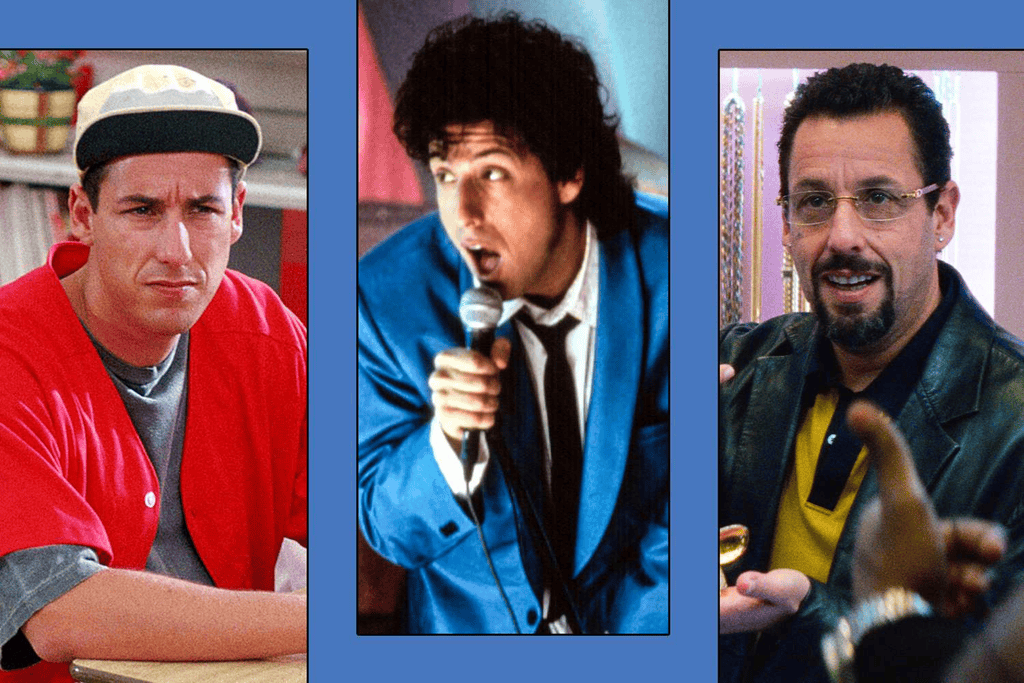
The thing I ultimately came back to when approaching this list is that Sandler has had an unprecedented amount of control over the movies he has made. Excluding some early work and the straight acting gigs with more serious directors, Sandler has written or rewritten essentially every movie he’s been in (though he often doesn’t take a writing credit) and served as an executive producer on all of them since The Waterboy. Since The Wedding Singer, he’s hand-picked the directors (and often, according to an interview with Norm Macdonald, essentially co-directed). He’s worked with the same few guys over and over — Frank Coraci, Steven Brill, and Dennis Dugan have combined to direct 17 Sandler films — and he’s famously, and increasingly over time, filled the cast with friends and past collaborators. He’s never had to waver from this approach because of his continued success. And right when it seemed like things were taking a dip, with four sub–$100 million grossers in five years, between 2011 and 2015, he signed a four-picture deal with Netflix that turned into an eight-picture deal that let him continue with even more freedom. As a result, when he does appear in other people’s movies, it’s not part of an attempt to raise his status in Hollywood, since he already gets to do whatever he wants. It’s driven by a desire to push himself, to try something new, to make new friends, to never stop working.
The point is that Sandler only makes the movies he intends on making. As he put it in The Independent, “I didn’t get into movies to please the critics. I got into it to make people laugh and have fun with my friends.” So if you watch all of his movies in a row, which I did, you can tell they come from the same point of view, which can also be found in his five beloved studio albums and his ironically acclaimed Netflix special 100% Fresh. All share core themes, structures, and character types with an Adam Sandler movie — a sensitive, quick-tempered, Gen-X man-child hero journeys to adulthood — and more specifically manhood — defeating bullies, meeting silly characters (as a way of showcasing his friends), and learning a lesson (one that’s transferable to his audience) along the way. Over the last decade or so, there have been exceptions, as Sandler got older, married, and had kids. The archetype was adult but still trying to get better, now often with the goal of being a better partner or father. Almost all of his serious work has served to subvert and/or complicate his fundamental character types.
As a result, when considering his oeuvre, I tried to judge his works by how successfully they achieved what he has been trying to do his whole career. That means artistically superior movies, like a Meyerowitz Stories, will be ranked lower than movies like The Waterboy, which better articulates Sandler’s artistic point of view; on the other hand, you’ll find Meyerowitz still higher than Sandler comedies like Little Nicky, since Meyerowitz represents a culmination of his acting life.
The Critical Dichotomy and Sandler’s Artistic Control
The historic split between critics and audiences stems from the type of films Sandler chooses to make: big, broad, unapologetically lowbrow comedies. While film critics judge his movies against universal cinematic standards, Vulture senior writer Jesse David Fox argues that an Adam Sandler movie must be judged against itself. Sandler exercises unprecedented control over his filmography, hand-picking his directors (often loyal collaborators like Dennis Dugan, Frank Coraci, and Steven Brill), co-writing scripts without taking credit, and populating casts with lifelong friends and SNL alumni.
Rather than chasing prestige or critical approval to raise his Hollywood status, Sandler’s primary motivation has always been simple: making people laugh and having fun with his friends. This unwavering creative autonomy allowed him to transition seamlessly from theatrical blockbusters to an unprecedented, highly liberating mega-deal with Netflix.
The Evolution of the Sandler Man-Child Archetype
The Focus: Groundhog Day-like character loops, arrested development, and shifting into dad roles.
Beginning with Billy Madison, Sandler pioneered a very specific cinematic archetype: the sensitive, quick-tempered, Gen-X man-child hero journeying toward adulthood. Unlike the collegiate pranksters of the 2000s Frat Pack, Sandler’s characters were regular, often underemployed guys with an adolescent, hyper-sensitive innocence. Across his filmography, these protagonists navigate chaotic lives before experiencing a mini hero’s journey, emerging wiser, more responsible, and ready to be better partners or fathers.
As Sandler aged, married, and started a family, his onscreen persona evolved organically. The raging, impulsive bachelors of the late ’90s gradually matured into the warmhearted, slightly melancholy, and deeply devoted fathers seen in later works like The Week Of, Grown Ups, and Hubie Halloween.
The Prestige Peak: From Punch-Drunk Love to Uncut Gems
While Sandler famously stated he didn’t enter the business to please critics, his rare dramatic excursions have consistently proved his extraordinary range as an actor. Auteurs like Paul Thomas Anderson (Punch-Drunk Love), Noah Baumbach (The Meyerowitz Stories), and the Safdie brothers (Uncut Gems) recognized the profound sensitivity and simmering desperation underlying Sandler’s comedic persona.
In Uncut Gems, the Safdies weaponized Sandler’s natural lovability to trap audiences in the frantic, self-destructive world of gambling addict Howard Ratner, cementing his status as a genuinely gifted dramatic actor capable of commanding high-art cinema without ever abandoning his core identity.
Why Click Claims the Number One Spot
Topping Vulture’s definitive ranking is Click (2006), a film that brilliantly encapsulates everything Adam Sandler has ever tried to achieve as a filmmaker. On the surface, it offers high-concept, escapist sci-fi comedy—featuring classic Sandler tropes, wild physical gags, and supporting turns from Jennifer Coolidge, Rachel Dratch, and Christopher Walken. However, beneath the broad humor lies a deeply personal exploration of workaholism, regret, and the passage of time.
Coming on the eve of his 40th birthday and the birth of his first child, Click serves as an emotional turning point. When Sandler’s overworked architect character uses a magical universal remote to fast-forward through life’s mundane moments, he discovers too late that he has skipped past the very memories that matter most. Balancing side-splitting comedy with devastatingly poignant family drama, Click stands as the definitive Adam Sandler movie—blending lowbrow laughs with high-stakes emotional wisdom.
Also Read : Taylor Swift and Travis Kelce: Taking Their Relationship to the Next Level”